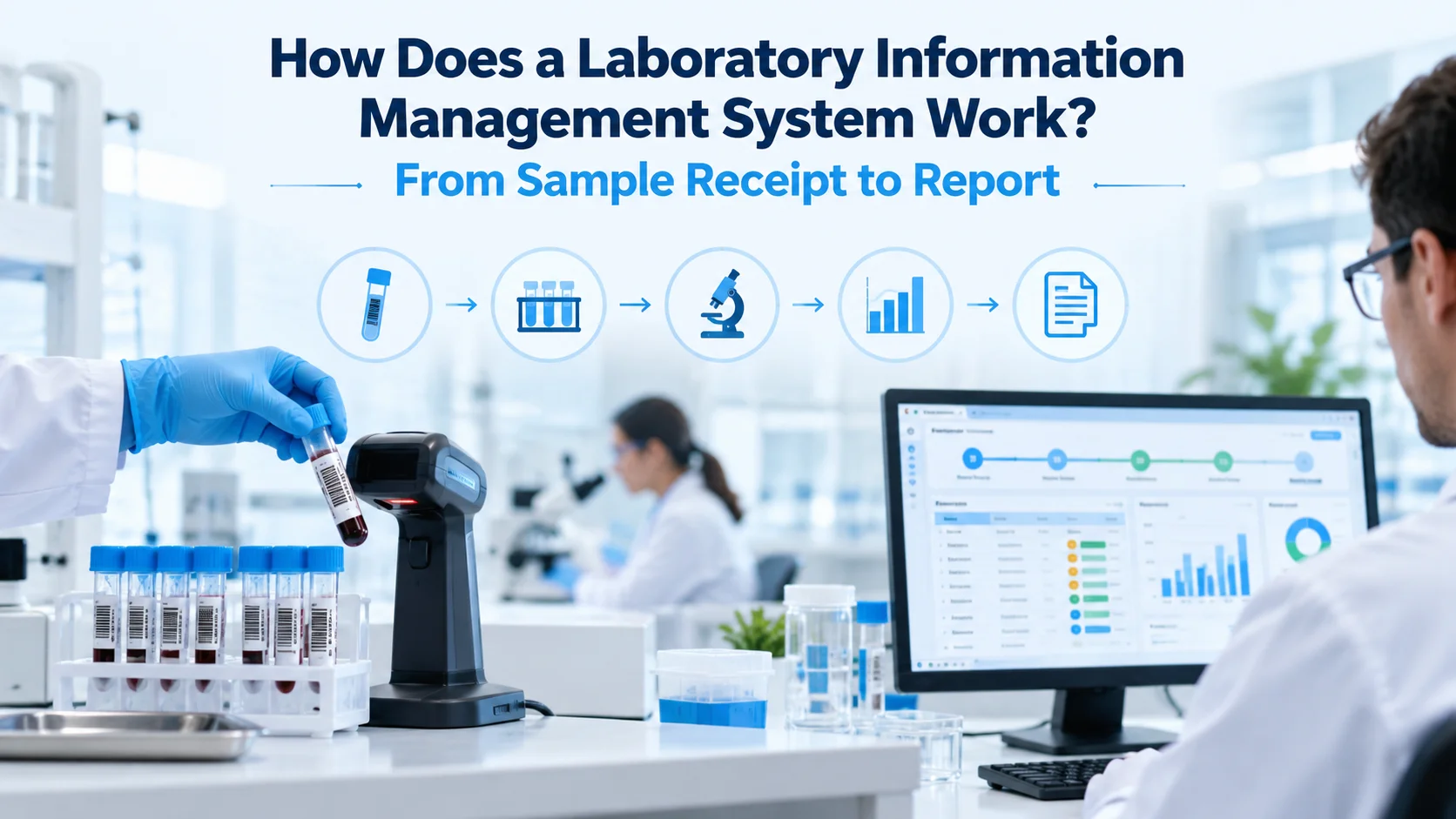
A laboratory may test hundreds or thousands of samples, but every result begins with a much longer process. A sample has to be received, identified, assigned to the correct testing, tracked through the laboratory, connected to methods and instruments, reviewed, approved and eventually reported.
When these steps are managed through separate spreadsheets, paper forms, emails and instrument files, keeping the complete history together can become difficult. That is where a Laboratory Information Management System, or LIMS, fits into the laboratory workflow.
A LIMS works by creating a connected digital record for laboratory work and moving that record through defined workflow stages. From sample registration to testing, result capture, technical review, approval and reporting, the system keeps the sample, methods, users, instruments, results and actions connected so authorized laboratory personnel can see what has happened and what needs to happen next.
The National Institute of Standards and Technology describes a LIMS as software developed to support laboratory operations such as tracking specimens and workflows and collecting or aggregating datasets. NIST also defines workflow as a sequence of connected operations showing how data moves between people, tasks, tools, inputs and outputs. NIST Research Data Framework
If you are still becoming familiar with the concept itself, start with our guide explaining what a Laboratory Information Management System is before looking more closely at the workflow described below.
How Does a LIMS Work in Simple Terms?
Think of a LIMS as the system that maintains the working relationship between a physical sample and all of the information generated around it.
When a sample arrives, the laboratory creates a digital record. That record may contain its identifier, source, sample type, customer or project, requested testing, priority and other relevant information.
As the sample moves through the laboratory, additional information becomes connected to that same record. Tests are assigned. Methods and specifications are identified. Analysts perform work. Instruments may generate data. Results are entered or imported. Reviewers verify the work. Authorized personnel approve the results, and the laboratory produces the required report or Certificate of Analysis.
Instead of each stage producing another disconnected file, the LIMS maintains the relationships between the stages. That is the fundamental idea behind how LIMS works.
For a broader view of the connected modules that support this process, LabZila's LIMS software features bring sample management, testing, quality activities, instruments, reporting and workflow control together within one platform. LabZila LIMS software features
The LIMS Workflow Starts Before Testing Begins
One of the most common misunderstandings about a laboratory information management system is that it primarily manages analytical results. Results are important, but the workflow begins much earlier.
Before an analyst performs a test, the laboratory needs to know exactly what has been received and what should happen to it.
A typical sample receipt process may involve checking the sample identity, condition, quantity, container, collection information, custody documentation, requested analyses and any relevant acceptance requirements.
The laboratory may also need to determine whether the sample is suitable for testing or whether there is a reason to reject it, quarantine it or request clarification. That information becomes the foundation for everything that happens afterward.
The U.S. Environmental Protection Agency provides a practical example in its laboratory quality documentation. EPA describes laboratories using electronic LIMS records to maintain unique sample identification and tracking information, while samples are inspected and logged when received. EPA laboratory sample tracking guidance
The exact procedure varies by laboratory, but the principle is consistent: accurate laboratory results depend on maintaining accurate context around the sample from the beginning.
Step 1: Sample Receipt and Accessioning
Once a sample is accepted, it normally enters an accessioning or registration process. Accessioning creates the official laboratory record for that sample.
The LIMS may capture information such as the sample name or description, source, customer or project, collection or manufacturing information, received date and time, sample type, required tests, priority and other laboratory-specific fields.
The system then assigns or records a unique sample identifier. That identifier is important because different samples may look physically identical. A barcode, QR code or laboratory ID connects the physical container to the correct electronic record.
From this point forward, every test, result, location change, review and report should be associated with the appropriate sample record.
LabZila's sample management workflow is designed around this lifecycle, from registration and unique identification through testing, storage, review, retention and final disposition. sample management and tracking software
Step 2: Tests, Methods and Specifications Are Assigned
Registering a sample answers the question: What did we receive?
The next stage answers: What are we supposed to do with it?
A laboratory may need to perform one test or dozens of tests depending on the sample, product, client, specification or regulatory context. The LIMS can associate the sample with the appropriate testing requirements.
These may include the test name, approved method, specification, units, reference standards, calculations, acceptance limits, required equipment, priority and due date. This structure matters because a result without context has limited value.
For example, a value of “12.4” does not tell a reviewer very much on its own. The reviewer also needs to know what was measured, which method was used, what units apply, what specification or acceptance criteria were relevant, and whether the work followed the required process.
By connecting this information before testing begins, the LIMS creates the framework into which the final result will eventually fit.
Step 3: Samples Are Tracked as They Move Through the Laboratory
The electronic record remains active while the physical sample moves. Depending on the laboratory, a sample might pass through receiving, preparation, extraction, testing, temporary storage, repeat testing, technical review and long-term retention.
A LIMS can record the sample's current status and location as it moves through these stages. This becomes particularly useful when laboratories handle large sample volumes or operate across several rooms, departments, freezers, storage areas or locations.
Instead of asking another employee whether they have seen a sample, an authorized user can check the sample record. Tracking can become more detailed when aliquots, sub-samples or derivatives are created.
The system should preserve the relationship between the original sample and the material created from it rather than treating each item as unrelated. The result is a clearer sample history rather than a collection of independent tracking records.
Step 4: Work Is Assigned to the Appropriate People and Equipment
Laboratory workflows involve responsibilities as well as data. A LIMS can help determine which tests are pending, who is responsible for performing them and which equipment may be required.
Depending on how the laboratory configures the system, assignments may be based on factors such as department, test type, analyst role, sample priority, workload, method or workflow stage.
This does not mean software independently decides who is qualified to perform laboratory work. The laboratory remains responsible for defining roles, competencies, procedures and authorization requirements. The software provides a structured mechanism for applying those decisions consistently.
A supervisor, for example, may be able to see which tests are awaiting assignment, which are currently in progress, which are overdue and which are waiting for review. That visibility can be particularly valuable when workload is increasing because bottlenecks become easier to identify.
Step 5: Testing Is Performed and Results Are Captured
Once the correct sample, method, analyst and testing requirements have been established, laboratory testing can proceed. Results can enter a LIMS in several ways. In some workflows, an analyst enters the result manually.
In others, calculations may be performed from entered values using configured formulas. Where compatible instruments and interfaces are available, data may also be transferred electronically from laboratory instruments or connected systems.
Instrument connectivity can reduce repetitive transcription, but it must be implemented carefully. The laboratory needs to ensure that the correct data fields are mapped and that imported results remain associated with the right sample, test and workflow.
LabZila supports planned connections with compatible laboratory instruments and external systems through supported APIs, interfaces, middleware and structured data formats. Integration feasibility depends on the specific instrument, protocol, data and laboratory process involved. LIMS instrument and system integrations
The important objective is not merely to move numbers from one system to another. It is to maintain the relationship between the generated data and the laboratory record that gives that data meaning.
Step 6: The LIMS Evaluates the Result Within Its Context
After a result is recorded, it may need to be evaluated against configured requirements. Depending on the laboratory workflow, the LIMS may display relevant specifications, reference limits, calculations, units, or QC information alongside the result.
This can help users recognize results that require further attention. However, software should not be confused with scientific judgment. An unusual result may have many possible causes.
There could be a genuine sample issue, an analytical problem, an instrument issue, a preparation error, a data-entry problem, or another factor that requires investigation. The LIMS can help make the information visible and route the record through the appropriate process.
Qualified laboratory personnel remain responsible for interpreting results and making the required technical decisions. That distinction becomes particularly important in regulated and quality-controlled environments.
Step 7: Completed Work Moves Into Technical Review
Testing is not complete simply because a number has been entered. Many laboratory workflows require another authorized person to review the work before results can be released.
Technical review may involve checking the result itself together with calculations, specifications, QC results, method information, analyst records, instrument information and other supporting details.
If something is incomplete or questionable, the record may be returned for correction, additional testing or investigation. If the work is acceptable, it can proceed toward approval. A LIMS provides a structured way to route records between these stages and maintain their status.
Rather than relying on an analyst to remember to email a reviewer, the workflow can assign or route the completed work according to configured laboratory rules.
LabZila's laboratory workflow automation capabilities, for example, can connect sample registration, test assignment, result entry, technical review, approval and reporting while maintaining a time-stamped workflow history. laboratory workflow automation software
Step 8: Results Are Approved or Sent Back for Further Action
Review and approval are related, but they are not always the same activity. A reviewer may verify that the testing record is complete and technically acceptable. A separate authorized person or role may then approve the result for reporting or release.
The exact sequence depends on the laboratory's procedures. A properly configured LIMS can preserve these distinctions. The record can show which person performed the work, who reviewed it, who approved it, when each action occurred and what the status was at each stage.
If a result is rejected, corrected or reanalyzed, the system should preserve the relevant workflow history rather than simply replacing the old state without context. This traceability becomes increasingly important as more users interact with the same laboratory records.
Step 9: Approved Results Become Laboratory Reports or Certificates
Once results have passed the required review and approval stages, the laboratory can move toward reporting. The reporting requirement varies considerably by industry. A contract testing laboratory may prepare a client-specific report.
A pharmaceutical or food laboratory may generate a Certificate of Analysis. An environmental laboratory may need structured laboratory reports or electronic deliverables. Other laboratories may provide internal reports to production, quality or research teams.
The important principle is that reported information should come from the approved laboratory record. A LIMS can reduce repetitive report preparation by connecting final results, sample information, methods, specifications and other approved data with controlled reporting templates.
With LabZila's Certificate of Analysis software, laboratories can connect reviewed results to configurable certificate templates and controlled review and authorization workflows while maintaining traceability back to the underlying sample and testing records. Certificate of Analysis software
Step 10: The Workflow Continues After the Report Is Issued
A common way of describing LIMS is “sample receipt to report,” but in many laboratories the lifecycle does not stop when the report is delivered. The laboratory may still need to manage the physical sample and its electronic records.
Samples may need to remain in storage for a defined period. Retain samples may need specific storage locations or conditions. Other samples may eventually be returned or disposed of.
Similarly, laboratory records may need to remain available according to company procedures, client agreements, quality-system requirements or applicable regulatory obligations.
A LIMS can therefore maintain the relationship between the completed analytical workflow and later retention or disposition activities. This gives the laboratory a more complete lifecycle record.
What Is Happening Behind the LIMS Workflow?
From the user's perspective, a LIMS may appear to be a series of screens, forms, dashboards, and status changes. Underneath those screens, the more important function is the relationship between records.
Consider a single sample. That sample might be connected with: a client or project, a batch or product, multiple tests, several methods, specifications, analysts, instruments, calibration information, raw or calculated results, QC records, reviews, approvals, comments and one or more reports.
If those items are maintained separately, reconstructing the complete history becomes difficult. A LIMS uses structured records and relationships so that these pieces of information can remain connected. That connected data model is one reason a LIMS is different from simply maintaining a large shared spreadsheet.
What Does a LIMS Automate?
A LIMS can automate parts of the laboratory process, but automation does not mean eliminating laboratory oversight. Useful automation generally focuses on repetitive or predictable workflow actions.
For example, a system may automatically assign a test when a certain sample type is registered, update a workflow status when required work is completed, notify a reviewer that results are ready, remind a user about an approaching due date, route approved results toward reporting, or flag an overdue activity.
This can reduce administrative follow-up and make processes more consistent. But technical conclusions, investigation decisions, final reviews and regulated approvals should remain under the appropriate laboratory controls and qualified personnel.
The most useful LIMS automation supports the laboratory's approved process rather than attempting to replace it.
A Practical Sample-to-Report Example
Consider a contract testing laboratory that receives a customer sample requiring several analyses. The receiving team first verifies the shipment and creates the sample record. The sample receives a unique identifier and is connected to the customer and project.
The required tests are then assigned according to the submission request. Each test is associated with the correct method, specification and due date. The sample moves into preparation and testing. Analysts record results, or compatible instrument data is imported through configured interfaces.
Once testing is complete, the record moves to technical review. The reviewer checks the result and relevant supporting information. If something requires attention, the test can be returned for further work. If acceptable, the results continue through the required approval process.
Approved results then populate the laboratory's report or certificate workflow. After the final document is authorized and issued, the LIMS retains the relationship between the report and the original sample, testing records and review history.
The physical sample can then follow the laboratory's retention, return or disposal procedure. What might otherwise involve multiple spreadsheets, email threads, instrument files and manually prepared reports becomes one connected workflow.
Why Does a Connected Laboratory Workflow Matter?
The main advantage is not simply speed. A connected workflow gives the laboratory better context. An analyst can see what work has been assigned. A supervisor can see what is pending. A reviewer can see the information associated with a result.
A laboratory manager can see where work is slowing down. Authorized users can trace a report back toward the supporting laboratory records. That can reduce time spent searching for information and make operational questions easier to answer.
LabZila is built around this connected sample-to-report concept, bringing samples, testing workflows, quality processes, instruments and reporting into a configurable LIMS rather than leaving each part of the laboratory in a separate system. LabZila LIMS software
Does Every Laboratory Use the Same LIMS Workflow?
No. A pharmaceutical QC laboratory does not work exactly like an environmental testing laboratory. A clinical laboratory has different processes from a cannabis testing facility.
A food safety laboratory may have different sample types, methods and release requirements from a contract research laboratory. Even two laboratories in the same industry may organize testing differently. That is why workflow configuration matters.
The purpose of a LIMS should not be to force every laboratory into one generic sequence. The system needs to reflect the laboratory's actual sample types, methods, roles, reviews, quality processes and reporting requirements.
Before implementation, teams should map their real workflow rather than simply copying an existing spreadsheet into new software.
What Should a Laboratory Define Before Configuring a LIMS Workflow?
Start with the sample lifecycle. Document what information is required when samples arrive, how identifiers are created, how tests are selected, where samples move, who performs work, how results are recorded, and who is allowed to review and approve them. Then document exceptions.
What happens if a sample is damaged?
What happens if a result requires reanalysis?
What happens if testing cannot be completed by the due date?
What happens if a reviewer rejects the record?
What happens when a certificate needs correction?
These exceptions are often where poorly designed workflows break down. A strong LIMS implementation should account for the normal path and the legitimate alternative paths through the laboratory process.
Common Mistakes When Designing a LIMS Workflow
One mistake is automating a process before understanding it. If the existing process contains unnecessary approvals, duplicate data entry, or unclear responsibilities, reproducing those problems electronically does not improve the workflow.
Another mistake is collecting information simply because the software allows another field to be added. Every required field creates work. Laboratories should understand why information is collected, who needs it, and how it will be used.
A third mistake is focusing only on sample registration and testing while ignoring review, reporting, and retention. The laboratory workflow is not complete when the analyst enters the result.
A fourth mistake is designing the LIMS around ideal situations while failing to consider exceptions. Real laboratories deal with rejected samples, retests, changed priorities, overdue work, corrected results, and other events that need controlled paths through the system.
How Do You Know Whether a LIMS Workflow Is Working Well?
A good workflow should make the state of laboratory work easier to understand. Authorized users should be able to determine where a sample is, which tests are required, which activities are complete, what remains pending, who currently owns the next action, and whether work is approaching or exceeding expected turnaround times.
Reviewers should be able to reach the information needed to evaluate work without reconstructing the process from multiple disconnected sources. Managers should be able to identify workload and bottlenecks without manually combining several spreadsheets.
And final reports should remain traceable to the records from which they were produced. The objective is not to make the laboratory more complicated. It is to make the complexity that already exists visible, structured and manageable.
Final Thoughts
So, how does a Laboratory Information Management System work? It works by maintaining a connected record of laboratory activity and moving that record through defined stages.
A sample is received and registered. Tests and methods are assigned. The sample is tracked through the laboratory. Results are entered or imported. Work is reviewed and approved. Approved data moves into reporting, and records remain connected through retention or final disposition.
The exact workflow differs between laboratories, but the principle stays the same: the LIMS connects the sample with the people, data, methods, equipment, decisions and reports that belong to it.
For laboratories still using disconnected spreadsheets, paper records and separate systems, understanding that workflow is the first step toward deciding whether a centralized LIMS would improve daily operations.
Want to see how this sample-to-report process can work within one configurable system? Explore LabZila and review how the platform connects samples, testing, approvals and laboratory reporting.